They Came to the Wrong State: How Minnesota Built Organizing Muscle Memory
Minnesota’s response to crisis didn’t happen overnight. It was built through years of community organizing, teacher union leadership, and mutual aid that created lasting muscle memory when it mattered.
A note from Kelly Booz: This is the second blog in a series on my trips to Minnesota. Read the first blog here. Each blog will tell a different story or lesson about how Minnesotans stepped up to support their neighbors and the law in a time when some Immigration and Customs Enforcement (ICE) officials were not doing the same. In my first blog, I reflected on my week in Minnesota, meeting with union leaders, teachers, parents, community members and community leaders, including a childhood neighbor, now City Council member Emily Dunsworth. In the first blog, I explained what makes Minnesotans show up for their neighbors. This new blog builds on the first by sharing a common theme: WHY Minnesotans felt ready to organize, and it goes back to one thing: the murder of George Floyd.
Although written in the first person, my colleague and fellow Minnesotan, Mary Cathryn Ricker, co-authored this second blog, both to review and fill in some of the on-the-ground context from 2020 and prior through today. Ricker is executive director of the Albert Shanker Institute, former Minnesota Commissioner of Education, former executive vice president of the AFT, former president of the Saint Paul Federation of Educators, and a middle school English teacher.
“We’ve Already Done This”: Organizing Before the Crisis
Every person I sat with in Minnesota shared the same sentiment: We've already done this. I heard it from union leaders. I heard it from teachers. I heard it from parents, and I heard it from Emily Dunsworth, my longtime childhood neighbor, now a New Brighton City Council member, driving me through neighborhoods where ICE had been most active, pointing out the window where she'd been boxed in the day before. Each time, the words were slightly different, but the meaning was identical:
"Minneapolis was such a miscalculation," Dunsworth said, not with pride exactly, but with a kind of tired clarity. "We've already organized once, and we're already pissed off. A lot of the mutual aid stuff, the systems: They were already in place."
George Floyd, the Pandemic, and the Growth of Mutual Aid
To understand why Minnesota was able to respond to this crisis the way it did, you have to go back six years. You have to start in 2020 with the pandemic and the murder of George Floyd.
The pandemic that started in 2020 required our entire country to shelter in place. And in Minnesota, like so many other states and communities, it demanded both formal and informal mutual aid programs to begin: grocery delivery, virtual systems of checking in, and informal animal fostering, among many others.
But in the aftermath of George Floyd’s murder, the Twin Cities (Minneapolis and St. Paul) experienced citywide curfews, peaceful protests met with tear gas and pepper spray, residents monitoring unfamiliar cars with out-of-state plates, and community members helping local businesses board up windows and doors. The friend and family-based mutual aid grew to be communitywide mutual aid.
To understand why Minnesota was able to respond to this crisis the way it did, you have to go back six years. You have to start in 2020 with the pandemic and the murder of George Floyd.
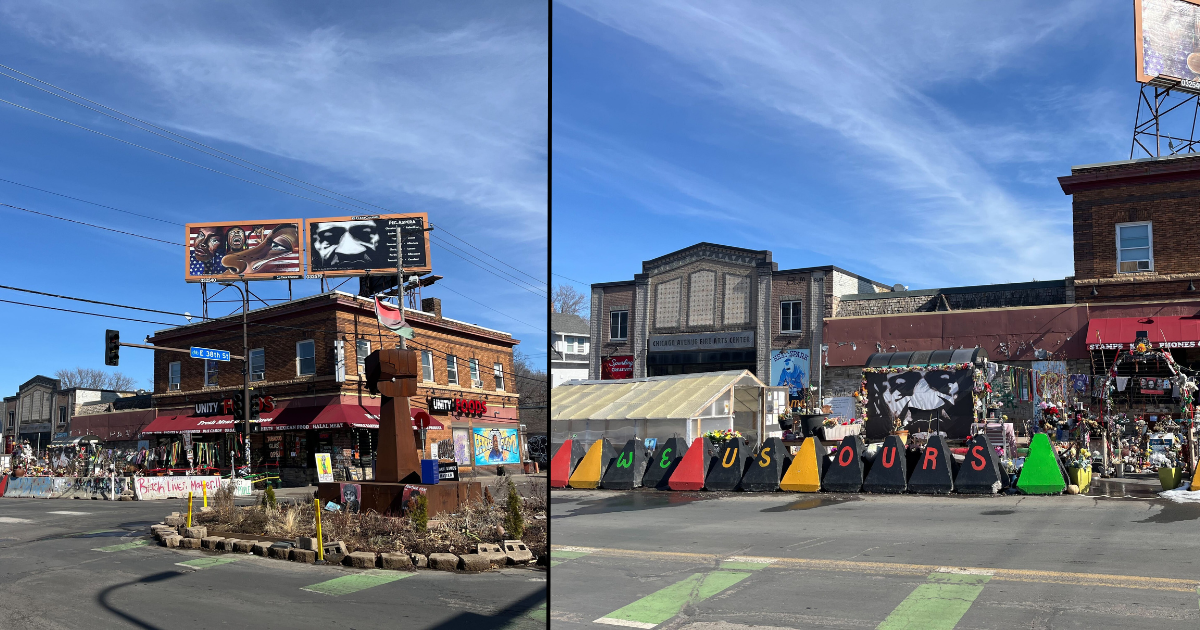
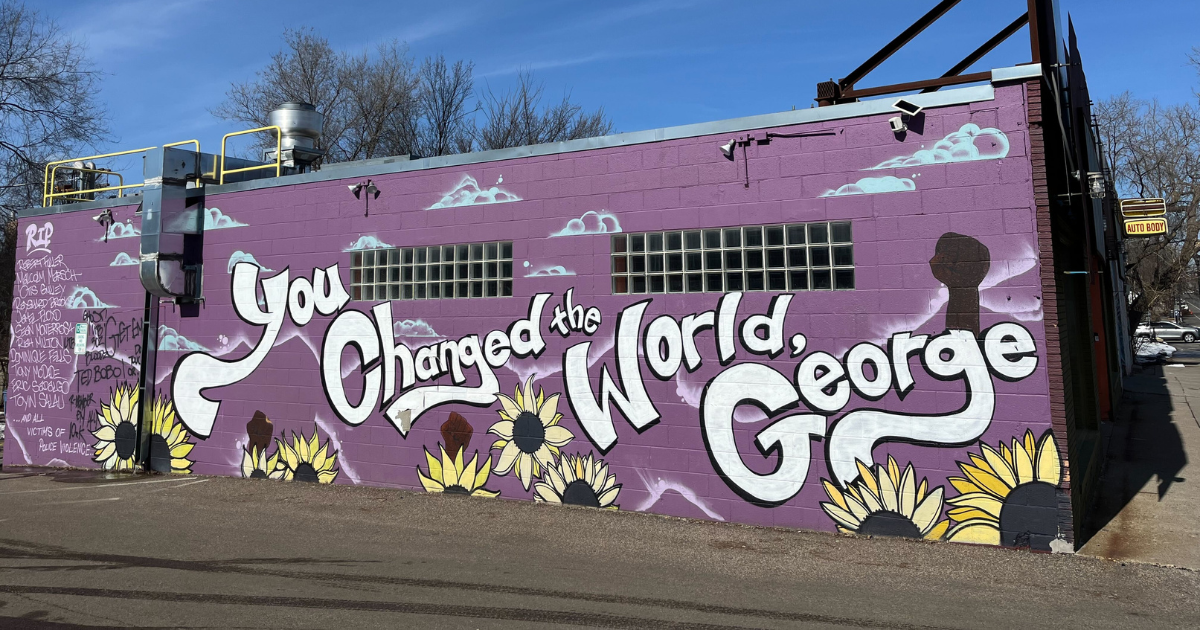
On May 25, 2020, a Minneapolis educator named Marcia Howard saw the video of George Floyd’s murder, shared on Snapchat by her former student, Darnella Frazier. Howard lived nearby and went to the scene that day. She took leave from her teaching assignment and spent much of the following year organizing and holding space at the George Floyd Square with the support of the AFT. Five years later, she is still part of the small steward group that meets there twice daily to maintain the site.
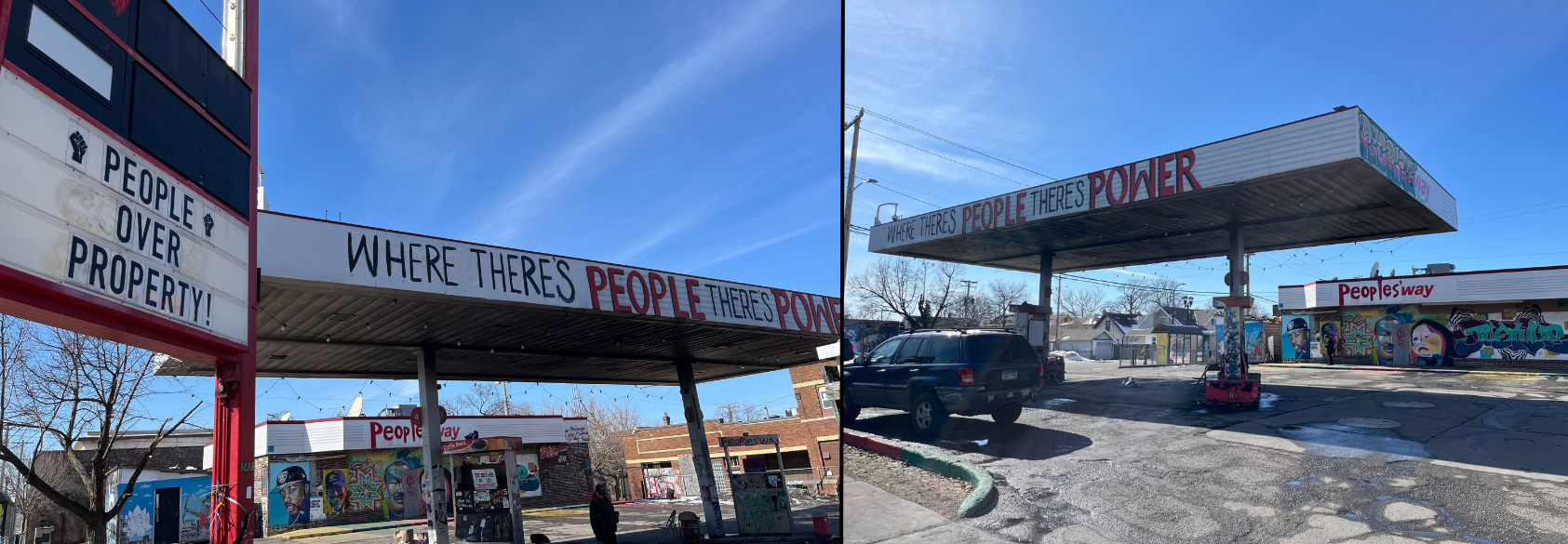
George Floyd Square, February 2026. Photos courtesy of Andrew Kratochvil.
Today, Howard is president of the teacher chapter for the Minneapolis Federation of Educators (MFE). When I sat with her and Catina Taylor, Education Support Professionals (ESP) chapter president for MFE, I found myself thinking: She is going to be in the history books. She is a living civil rights legend, and she is running a teachers union, and right now those two things are exactly the same job.
What George Floyd's murder did to Minneapolis, beyond the grief and the rage, was to force a reckoning with infrastructure, and the days after were marked by an unprecedented, multiagency public‑safety response (local, state, and National Guard). The atmosphere felt militarized even as information was chaotic and rumors traveled fast. People I spoke with also described moments when blocks felt sealed off, and basic essentials (diapers, food, etc.) were hard to access.
George Floyd Square, February 2026. Photo courtesy of Andrew Kratochvil.
And the people who responded—teachers, parents and community members—had to figure out on the fly how to get resources to families who couldn't leave their homes.
Minneapolis already had a comprehensive emergency operations plan at the time that aligned with national standards. It laid out how agencies were supposed to coordinate in a crisis. But the city’s own after-action review later found that the plan was not effectively implemented. There was no clearly designated incident commander in the early days. There was no formal incident action plan guiding the response. The Office of Emergency Management played only a minimal role in coordination. In that same report, many residents reported feeling abandoned. With little clear communication and inconsistent direction from city leadership, neighborhoods developed their own information networks, safety patrols and mutual-aid systems. They stepped into the vacuum.
Sound familiar?
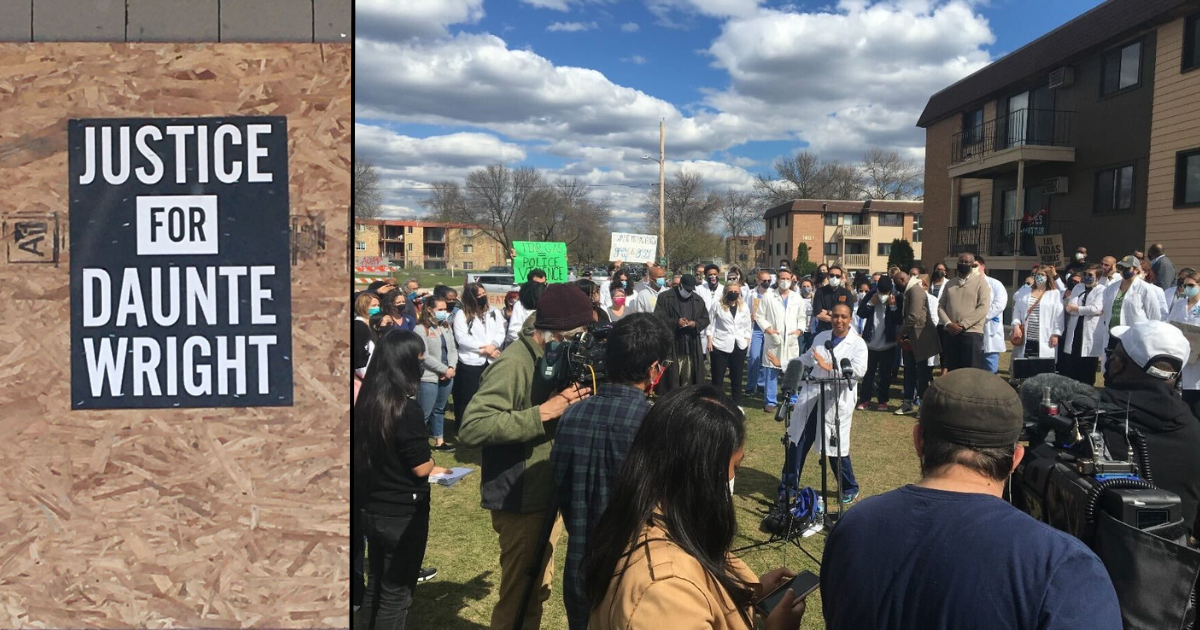
One teacher I spoke with described a school in the wake of Daunte Wright's fatal shooting by a police officer. She shared that the neighborhood surrounding the uprising was blockaded for a period, making it hard for families to access the mutual aid they relied on from their fully-service community school, one of a growing number in Minnesota that serve as community hubs, not just classrooms. They already had food stockpiles, diapers and supply networks. Volunteers walked through the neighborhood delivering supplies to families who couldn't get out.
Daunte Wright protest and “White Coats press conference” after the murder of Daunte Wright. Photos courtesy of Mary Cathryn Ricker.
"I think that was one experience that kind of shaped us to be ready," she told me. She used a term I heard over and over during my trip: “muscle memory.”
The George Floyd moment did something else, too. It built or deepened the relationships between unions and community organizations that would prove crucial in 2026.
The MFE has marched, organized and fought alongside its community for years. The union members wear black on Mondays, to this day, a tradition that started in the aftermath of 2020. The MFE went on strike in 2022, and out of that strike came something that would matter enormously later: Minneapolis Families for Public Schools, a parent organization built and enhanced during the contract campaign.
When the ICE surge hit, that parent infrastructure didn't need to be created from scratch in Minneapolis. It already existed. It already had relationships and trust.
How Teacher Union Organizing Built Community Crisis Infrastructure
On the other side of the Mississippi River, the Saint Paul Federation of Educators (SPFE) had begun robust organizing and community collaboration work decades earlier. In the past 20 years, workplace organizing grew from a traditional site steward structure to experimenting with leadership positions that included professional development, contract defense and political information, ultimately leading to the Contract Action Team structure in 2011 that can be easily replicated to fit any organizing plan.
Around that same time, the leaders of the union embarked on work to create a narrative to work with the community more directly to improve all peoples’ lives, recognizing that “working collectively” is “a powerful force for justice, change and democracy.” This narrative documented the foundation of the pioneering bargaining for the common good work the union would first build into its contract campaigns beginning in 2011, and expanding into work at the Legislature, alongside allies, and in the community.
The SPFE’s Deportation Defense Committee, the union member-led group that became the spine of its crisis response, as SPFE leaders described it to me, hadn’t formed when the surge hit; they told me it had formed earlier, before the surge, when members started meeting in anticipation of what might happen in Minnesota. When the crisis arrived, that committee was already built.
When the ICE surge hit, that parent infrastructure didn't need to be created from scratch in Minneapolis. It already existed. It already had relationships and trust.
They took their existing Contract Action Team structure, the model they first started using in 2011 to organize work sites during bargaining, and applied it directly: a point person at every one of their 70 work sites, regional leads checking in, two member leaders at the top coordinating with staff. They flew the plane because they'd already been building it in their union structure and in their community relationships.
"Building the muscles of strong contract campaigns helped us transition to a districtwide structure for this work," one leader told me plainly.
There's one more thing about Minnesota that matters, and my childhood neighbor and now City Council member Emily Dunsworth said it best: "This is a state where you get vote shamed," she told me. "If you didn't vote, people are like, what the hell is wrong with you? There is just such an expectation of being civically engaged in everything."
What the Trump administration didn’t understand when it chose Minneapolis and St. Paul as a target is that it was sending federal agents into one of the most organized communities in the country; a community that had already survived an intense, multiagency deployment and breakdown of normal systems in 2020, that had already built mutual aid networks, and that had already forged deep bonds between unions and families and neighborhoods through years of contract fights, protests and crisis response.
Minnesota is built on activism.
In June and October 2025, millions of Americans took to the streets in a series of massive coordinated protests called “No Kings”—demonstrations against the administration's escalating authoritarianism that became among the largest single-day protests in American history. Minnesota showed up in force. And in doing so, communities that had never organized before began to learn what organizing felt like.
MFE’s Marcia Howard puts it plainly: "If you hadn't had No Kings, you would not have had the muscle memory."
This is not a story about Minnesota being special. It's a story about what preparation looks like, and what it makes possible. Because the same infrastructure that helped Minnesotans show up for No Kings demonstrations is what helped them show up for each other when the crisis arrived. The question for the rest of us is: How do we build that same foundation, even if we haven't had a galvanizing moment like George Floyd’s murder?
The answer, it turns out, looks a lot like making the choice of going to a vending machine (or in Minnesota lingo, a pop [aka soda] machine) or to the gym.
The “Pop Machine vs. Gym Membership” Model of Organizing
From a SPFE report in 2014 titled The Power of Community, the analogy of going from a pop machine to a gym membership went a little bit like this:
For many years, the union operated as a pop machine—members put their money, or dues, in the machine, expecting the product they were thirsty for at the moment to fall near their feet. When you don’t get what you want from a pop machine, you end up kicking it because you feel powerless. Buying an ice-cold pop also doesn’t require you to do much; you simply put the money in the machine, expecting it to work for you.
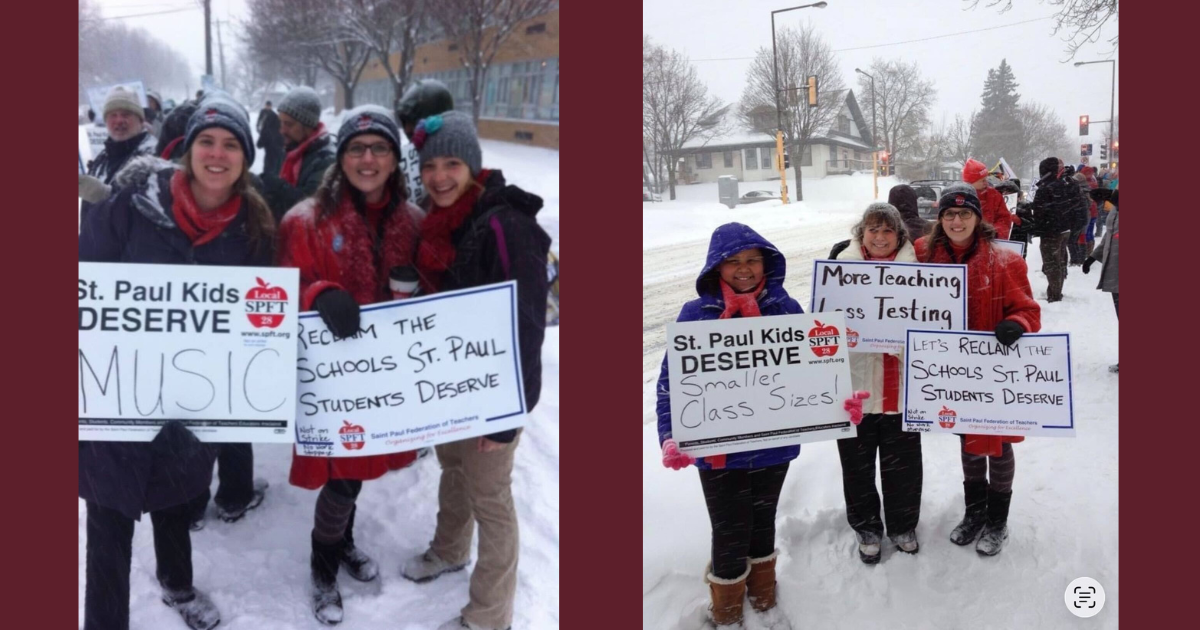
Ricker and her colleagues who elected her saw another way. Instead of the pop machine model, work began to move the union to a model that represented more of a gym membership. Gym members pay a monthly membership fee but results are only possible if you show up and do the work. Walking on the treadmill and lifting weights in the midst of a community of fellow fitness-seekers keeps you motivated. Together, you celebrate the results of the work you’ve been able to accomplish.
Mary Cathryn Ricker (in the red coat) participating in the Saint Paul Walk-ins, January 2014. Photos courtesy of Mary Cathryn Ricker.
You Don’t Build Organizing Muscle Memory in a Crisis
You don't build muscle memory in a crisis. You build it the same way you build any muscle—slowly, repeatedly, and long before you need to use it at full strength.
Nobody walks into a gym for the first time and lifts heavy weights, or if you do, you will feel that pain for the next few days. Instead, you start with what you can manage. You show up again. You add weight gradually. You rest, you recover, and you come back. The strength you have on the day it really matters isn't the product of that day's effort alone; it's the product of every ordinary Tuesday when you could have skipped going to the gym but didn't.
Organizing works exactly the same way.
A teacher who checks in on a student's family after an absence. A union rep who builds a text chain for their hallway and uses it for a fundraiser, for a sub shortage, for anything before they ever need it for something urgent. A parent who shows up to one more school board meeting than they thought they had time for. A neighbor who brings a meal, makes an introduction and adds a name to a list. None of these things feels like crisis preparation. But they are the union reps. And when the moment comes, the arrest at the bus stop, the family who doesn't show up, and no one knows why, the people who have been doing the small things are the ones who know what to do. Not because they trained for this, but because they trained at all.
There's another part of the analogy that matters, though: You can't bank it. The communities in Minnesota aren't coasting on 2020. They kept the relationships active. They kept the structures warm. They kept showing up to the meetings, wearing black on Mondays, staffing the committees even when there was no urgent reason to.
So when between 50,000 and 75,000 Minnesotans showed up on Jan. 23, 2026, to protest ICE, despite it being a dangerously cold day—15 degrees Fahrenheit with a -40 below wind chill (and that’s being kind; that was the warmest part of the day), they weren’t showing up for the first time. They collectively had created a structure where the community worked together.
Images from the January 23, 2026 ICE Out protest. Photos courtesy of Mary Cathryn Ricker.
We saw this play out in real time last year. The first No Kings protest on June 14 brought an estimated 5 million people into the streets across more than 2,100 cities and towns. People who had never held a sign, who had never shown up to anything, went. They drove downtown. They found their neighbors. They felt what it meant to be part of something larger than themselves.
Here, again, Minnesotans showed us who they were amidst tragedy and threat. Early morning June 14, an assassin, posing as a police officer, murdered Minnesota Speaker of the House Emerita Melissa Hortman, her husband, and their dog and attempted to murder Minnesota Senator John Hoffman and his wife. That day began with tragedy, immense sadness, and fear as the manhunt was ongoing. Governor Walz and other officials urged people not to gather at No Kings rallies. Despite these warnings, Minnesotans across the state said with their bodies that they wanted to be in community. Fear and mourning would not keep them indoors. Over 25,000 Minnesotans gathered at the State Capitol in Saint Paul and countless others gathered in communities across Minnesota that day.
And then, four months later, they came back. On Oct. 18, No Kings 2.0 drew an estimated 7 million people across the United States. The second No Kings was larger, not because the organizers worked twice as hard. But because the people who showed up in June had already used the muscle once. They knew where to go. They knew what it felt like. And they brought someone with them.
That's the other thing about building muscle: It's easier when you don't do it alone. Workout buddies don't just make it more fun; they make you more likely to show up. You're not just accountable to yourself anymore. Someone is waiting for you. Someone is counting on you. And when you both show up, you push each other further than either of you would have gone on your own. October was bigger than June because millions of people made a simple ask: Come with me.
No Kings is coming back on March 28, and organizers expect it to be the biggest yet. That's not a coincidence. That's what happens when millions of people have already done the reps.
One educator in Minnesota said something that stuck with me: "We didn't know we were getting ready. We just kept showing up."
That's the part that's available to every community right now. Not the federal occupation. Not the 365 days at a memorial. Just keep showing up. Know the name of the parent next to you. Answer the text. Go to the meeting. Use the muscle, so it's there when you need it. And bring someone with you.
What Other Communities Can Learn from Minnesota
The question I left with, and the one I'll be sitting with for a while, is the one Emily Dunsworth asked me as we drove: "Your community might not be ready. But what do you need to do now to get there?"
I don't think you need to have survived a “federal occupation” to build what Minnesota built. But you do need to start before the crisis. You need to know your neighbors. You need strong work-site structures. You need the relationships between educators and families to be deep enough that, when things get bad, there's already trust in place to activate.
You need the muscle memory. Enjoy that pop or quick vending machine refresher, but the only way to build that muscle memory is to start using the muscle.
CARE: Community Awareness, Readiness, and Education
CARE stands for Community Awareness, Readiness, and Education. This community is a space for educators, union leaders, families, and community partners to find tools, examples, and reference materials that support awareness, preparedness, and care when immigration enforcement actions or other moments of uncertainty may affect our schools and neighborhoods.
Mary Cathryn Ricker is Executive Director of the Albert Shanker Institute and a National Board Certified middle school English/language arts teacher who has served as Minnesota’s Commissioner of Education, as Executive vice-president of the American Federation of Teachers, and as president of the Saint Paul Federation of Teachers, Local 28. Prior to her leadership outside of the classroom, Ricker was a classroom teacher for 13 years in Minnesota, Washington State, and South Korea.
Kelly Carmichael Booz is the Director of Share My Lesson at the American Federation of Teachers, where she oversees the AFT’s PreK–12 resource platform serving nearly 2.3 million educators. She leads the organization’s digital professional development initiatives, including co-creating the... See More